
Japanese Scientists Develop Method to Eliminate Chromosome Linked to Down Syndrome
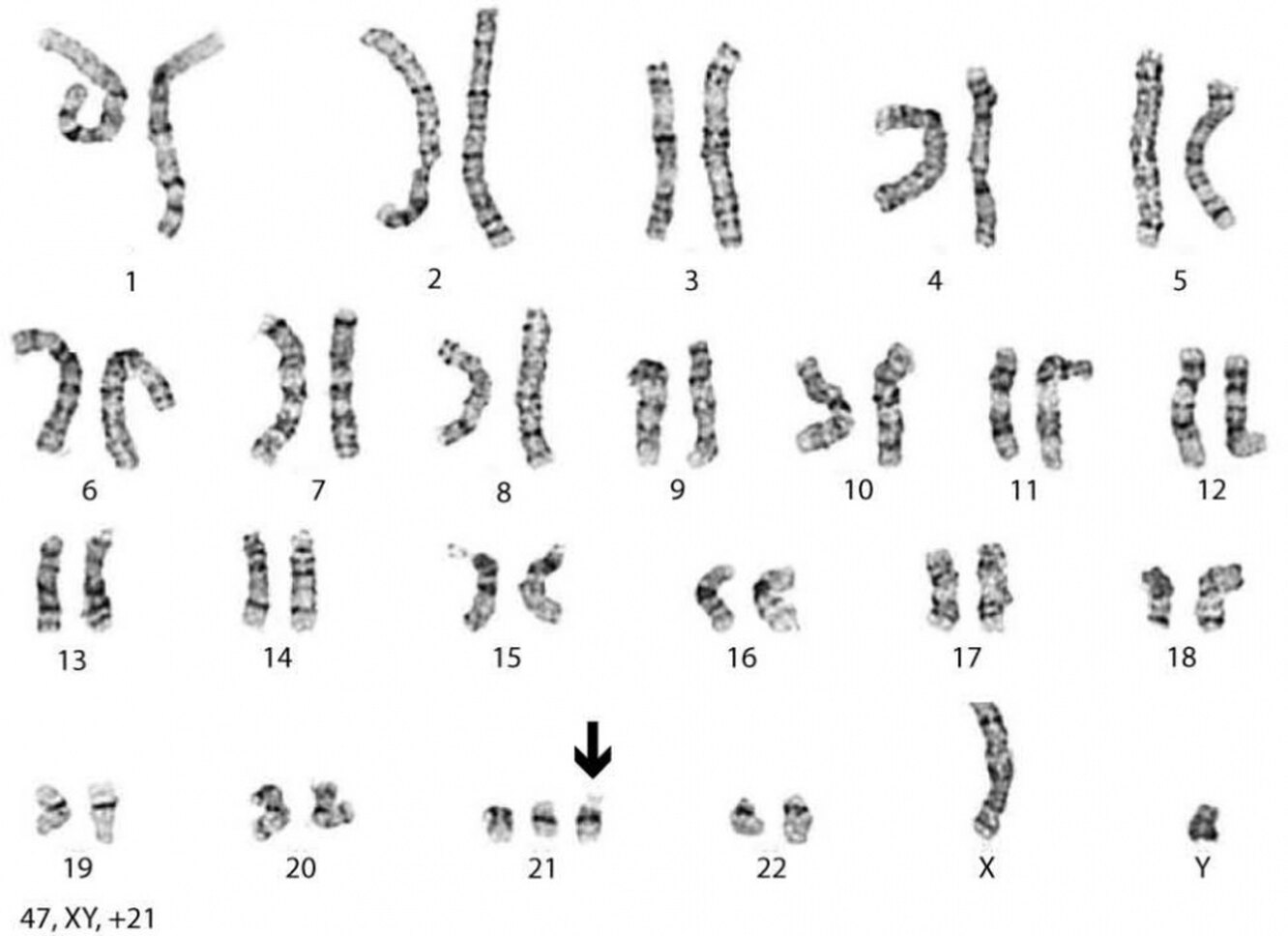
Down syndrome is the most common chromosomal abnormality, caused by the presence of an extra copy of the 21st chromosome (trisomy 21). This genetic disorder leads to physical characteristics, developmental delays, congenital heart defects, hearing problems, and difficulties in learning and speech.
However, researchers at Mie University in Japan have made a significant breakthrough — they developed a gene-editing method that can remove the extra chromosome.
The results of the study, published in the journal PNAS Nexus, show that the CRISPR/Cas9 system, used to edit DNA, can remove the surplus chromosome from affected cells.
CRISPR uses specific enzymes to locate target DNA sequences and, once a match is found, can delete entire chains of genetic material. In this study, scientists designed CRISPR guide molecules that specifically target trisomy 21.
This method, known as allele-specific editing, allows the enzyme to act only on the intended target.
During the experiment, researchers found that after removing the extra chromosome, gene expression in the cultured cells returned to normal. Further tests showed that genes involved in nervous system development became more active, while those responsible for metabolism slowed down.
Additionally, the corrected cells began to grow faster, and their division time decreased compared to untreated samples.
Besides laboratory-grown cell cultures, scientists also tested CRISPR on skin fibroblasts taken from individuals with Down syndrome. In several cases, the method successfully removed the extra chromosome.
However, since CRISPR may also affect healthy cells, researchers emphasize that clinical application of this technology is still far off.
Currently, the team is working on improving the method to ensure that editing affects only trisomic cells.
The full findings of the study are available in the journal PNAS Nexus.
Yurak-qon tomir kasalliklarining oldini olishda jismoniy faollikning ahamiyati
Xonqa tumanida tibbiy ko‘rik tashkil qilindi
Xiva tumanida tibbiy ko‘rik tashkil qilindi
Yakka tartibdagi tadbirkorlar va oʻzini oʻzi band qilgan shaxslar uchun qoʻshimcha soliq imtiyozlari berilmoqda
Halol mehnat – xotirjam hayot va farovon jamiyat
Tadbirkor – elga madadkor
Mehnat shartnomasi – ijtimoiy himoyangiz kafolati