
Additional Tax Incentives for Individual Entrepreneurs and Self-Employed Persons
In Gurlan district, 20 tax inspectors have been assigned to 50 neighborhoods (mahallas). As a result of the explanatory work carried out by these inspectors with business entities, 1,728 unofficial workers in 955 enterprises were legalized during the past nine months of this year, ensuring their social protection. Based on their official wages, an additional 304.5 million soums of income tax was accrued to the state budget.
Effective work is being carried out to restore the activity of entrepreneurs who have temporarily ceased operations for various reasons. For example, the operations of 5 enterprises have been resumed, and assistance was provided to 221 business entities facing temporary financial difficulties. Additionally, based on inspections conducted in neighborhoods, 317 individuals engaged in illegal economic activity were legalized and officially registered with the state.
Today, there are many citizens who possess vocational skills or are engaged in certain types of activities at home on an individual basis. Tax authorities are providing practical assistance to help them become self-employed and gain work experience.
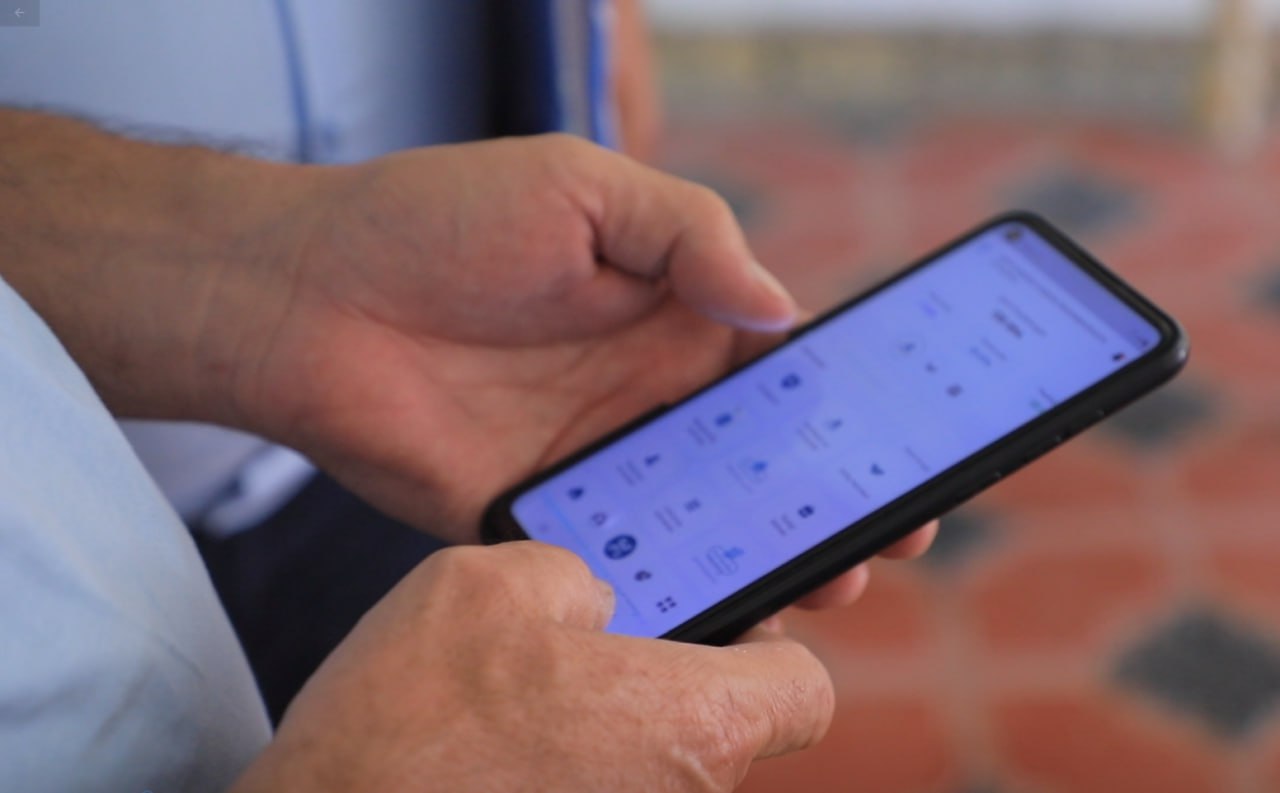
Awareness campaigns were conducted in neighborhoods in accordance with Presidential Decree No. 247 dated August 12, 2025, “On Measures to Create Favorable Conditions for Individual Entrepreneurs and Self-Employed Persons.” During the event, it was explained that individuals can register or deregister as self-employed using the Tax Mobile App.
Furthermore, starting from January 1, 2026:
The procedure for paying personal income tax at a fixed amount for individual entrepreneurs (IEs) will be abolished;
A turnover tax will be introduced on self-employed individuals' income from goods/services up to 100 million soums;
Note: Currently, income up to 100 million soums from goods/services by self-employed persons is exempt from tax.
For IEs and self-employed persons with an annual turnover of up to 1 billion soums, the turnover tax rate will be set at 1% (currently, it is set at 4%).
According to the decree, a special legal regime will be introduced for IEs and self-employed individuals, which includes:
▫️From November 1, 2025, individuals can be registered as IEs or self-employed through digital platforms using remote biometric identification and SMS confirmation via mobile phone;
▫️IEs and self-employed persons will be allowed to open electronic wallets on digital platforms. These wallets will be treated as equivalent to bank accounts used for receiving income, conducting business operations, making payments to employees and government institutions, and paying taxes and other mandatory charges.
The decree also introduces a “same-day payment” mechanism for those who hire daily workers. In this case:
An electronic labor contract must be signed with the worker;
The worker must have an electronic wallet on a digital platform;
Strict tax compliance, including tax calculation and payment, is required.
In collaboration with the “Mahalla Seven” structure, 12,037 citizens in the district have been registered under the self-employment system and have been engaged in specific types of activities.
Such citizens, taking their first steps in entrepreneurship, are learning to earn and are eventually becoming large-scale entrepreneurs. Their neighbors, inspired by their example, are also starting their own businesses. As a result of the “Mahalla-by-Mahalla” system, additional income sources worth 3.44 billion soums were identified in the district this year. In addition, 14.492 billion soums of taxes were collected from personal residential properties. 10% of the collected amount — i.e., 1.449 billion soums — was left in neighborhood budgets. Tax inspectors assigned to neighborhoods played a key role in achieving these results.
One of these inspectors is Ravshanbek Rakhmonov, the tax inspector of the “Ma'rifat” neighborhood:
“Currently, in the neighborhoods assigned to me, there are 61 legal entities, 1 farm, 10 NGOs, 589 individual entrepreneurs, 67 dehkan (smallholder) farms, 1,031 property tax payers, 616 land tax payers, and 30 declaration-based taxpayers,” says Rakhmonov. “We are constantly supporting them. As a result, 200 million soums in additional sources were identified.”
“Most importantly, 10% of the property and land tax and 15.6 million soums from the sale and lease of idle real estate were collected as sources of funding for the Neighborhood Social-Economic Problem Resolution Fund.
Throughout our work, we promote effective use of household plots and dehkan land, introduce modern management practices in agriculture, and encourage the cultivation of high-yield and export-oriented crops. If it is found during inspections that land plots are left idle or uncultivated, those citizens may be denied access to preferential loans, excluded from the Unified Register of Social Protection, and have their land tax calculated at triple the rate.”
“Today, tax inspectors assigned to neighborhoods are achieving practical results in combating the shadow economy. If we teach entrepreneurs to work legally and honestly, tax revenue to the budget will continue to grow.”
Romon Atajanov
Head of the Public Relations Department
Khorezm Regional Tax Administration
Yurak-qon tomir kasalliklarining oldini olishda jismoniy faollikning ahamiyati
Xonqa tumanida tibbiy ko‘rik tashkil qilindi
Xiva tumanida tibbiy ko‘rik tashkil qilindi
Yakka tartibdagi tadbirkorlar va oʻzini oʻzi band qilgan shaxslar uchun qoʻshimcha soliq imtiyozlari berilmoqda
Halol mehnat – xotirjam hayot va farovon jamiyat
Tadbirkor – elga madadkor
Mehnat shartnomasi – ijtimoiy himoyangiz kafolati